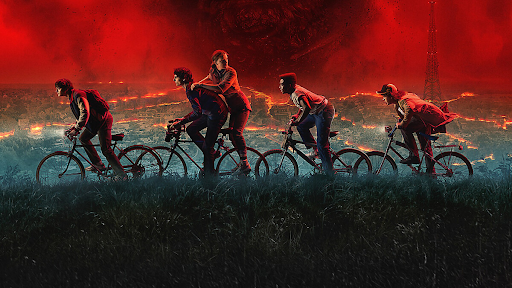
When Stranger Things premiered in 2016, few could have predicted its impact. What began as a nostalgic sci-fi show, quickly became a cultural phenomenon. With the release of Season 5, the series not only closed its storyline, but also an era of TV that shaped an entire generation of viewers. The final season wasn’t entirely fulfilling – some emotional moments felt rushed – but it still wrapped up the story in a decent, heartfelt close that honored the journey of its characters.
The final season opens in a different Hawkins Indiana, permanently scarred from the past battle that happened in their tiny, once safe town. The show maintained the funny, sarcastic language that we often associate with characters like Robin Buckly and Steve Harington, yet the long gaps between seasons and the escalating stakes of each conflict signaled a darker, more serious narrative, where characters were confronting lasting consequences rather than childhood dangers.
Despite certain things unchanged, it was clear that the characters had grown up. We saw this is Dustin Henderson’s shift from being the comedic relief to becoming consumed with grief after Eddie Munson’s death in Season 4. In one of the Season’s more telling events, Will Byers, a longtime victim of the Upside Down’s influence, gained the ability to channel Vecna’s powers, signaling how permanently the supernatural has marked him, while Max Mayfield, once the group’s outsider and now one of its most battle-worn members, guiding Holly Wheeler, the youngest of the group, inside Vencas’s mind showed how far these characters have moved from childhood into responsibility.
Even though season 5 could be improved (Max definitely should have ran faster!), I think the characters deserved the mostly happy ending they got. From Dustin giving his valedictorian speech, delivered with the same humor that Eddie once used to describe his own graduation, which served as a clear nod to the group’s shared past. Later, placing their D&D binders back on the shelves of their childhoods reinforced how these moments of reflection connected the characters’ present accomplishments to the friendships and adventures that shaped them.
This season, while not entirely satisfying, (for example, the “Abyss Twist” which showed that the Upside Down was a wormhole that connected their world to “Dimension X” felt jarring and tacked on since we only really found out about it in the last 4 episodes), was enjoyable to watch.
Stranger Things does not close with a grand message or a promise of permanence. It ends with change, distance – particularly as the group goes their different ways – and the sense that life continues elsewhere despite loss and danger. The finale, while far from perfect, lingered on more on personal reckonings than of the series’ escalating threats, and it is that quiet reflection, rather than action-packed moments, that gives the ending its lasting weight.